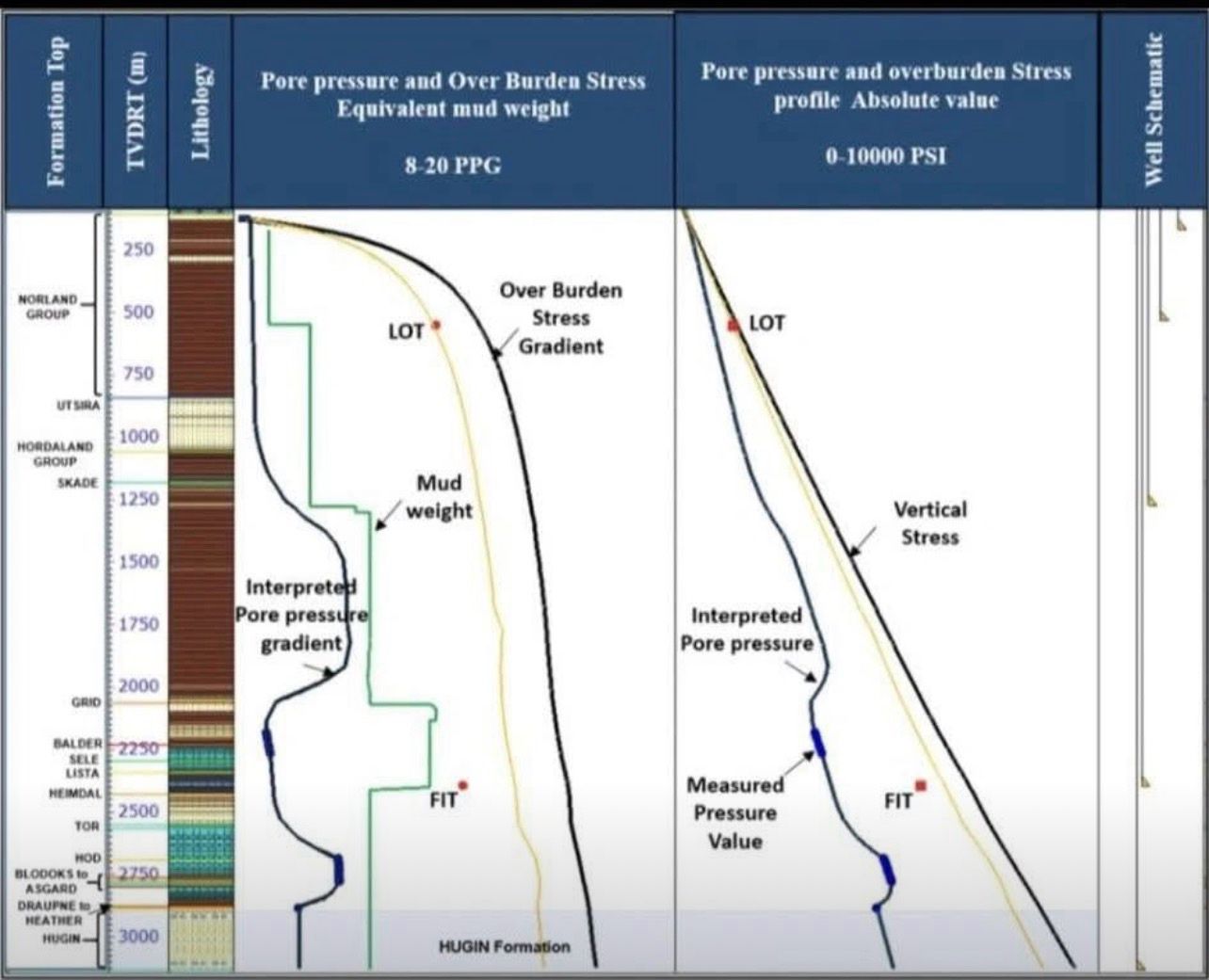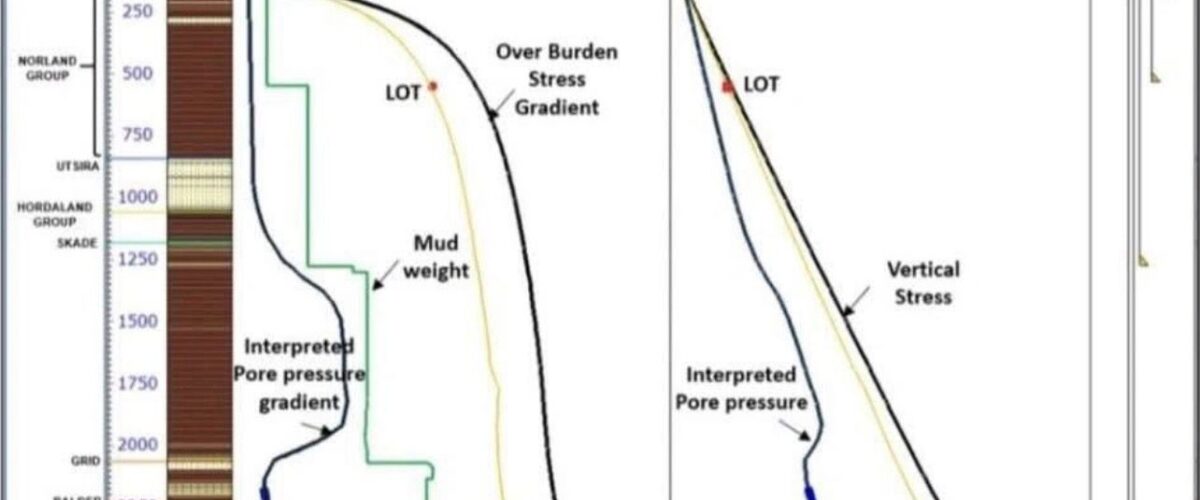
𝗙𝗿𝗮𝗰𝘁𝘂𝗿𝗲 𝗽𝗿𝗲𝘀𝘀𝘂𝗿𝗲 𝗴𝗿𝗮𝗱𝗶𝗲𝗻𝘁𝘀
What is a Fracture Pressure Gradient?
The fracture pressure gradient is the pressure required to initiate and propagate fractures in a rock formation, expressed as pressure per unit depth (e.g., psi/ft or kPa/m). It is determined by the mechanical properties of the rock, in-situ stresses, and pore pressure.
Importance of Fracture Pressure Gradients
1. Wellbore Stability: Helps prevent unintentional fracturing of the formation during drilling.
2. Mud Weight Design: Guides the selection of appropriate mud densities to avoid fracturing or fluid losses.
3. Hydraulic Fracturing: Determines the pressure needed for creating fractures to enhance reservoir permeability.
4. Well Control: Ensures proper management of kicks and prevents blowouts by maintaining pressures within safe limits.
Factors Influencing Fracture Pressure Gradients
1. Formation Stresses
Overburden Stress: The weight of the rock above the formation contributes to vertical stress.
Horizontal Stresses: Vary due to tectonic activity and rock properties, influencing fracture orientation and gradient.
2. Rock Properties
Tensile Strength: Rocks with higher tensile strength require higher fracture pressures.
Porosity and Permeability: Porous rocks tend to have lower fracture gradients due to weaker rock frameworks.
3. Pore Pressure
Normal Pressure: Formations with hydrostatic pore pressure typically have higher fracture gradients.
Overpressure: Abnormally high pore pressures reduce the fracture pressure gradient.
4. Fluid Properties
Drilling Fluids: The density and composition of drilling fluids affect formation pressures and potential fracturing.
Reservoir Fluids: The interaction between injected fluids and formation fluids impacts fracture initiation.
Determining Fracture Pressure Gradients
1. Leak-Off Tests (LOT)
Conducted after casing is set, LOT involves applying pressure to the formation until a small amount of fluid leaks into it. The pressure at which this occurs indicates the fracture pressure.
2. Formation Integrity Tests (FIT)
Similar to LOT but stops short of fracturing, providing a lower-bound estimate of formation strength.
3. Laboratory Testing
Rock samples are tested under simulated reservoir conditions to measure fracture pressures.
4. Empirical Correlations
Fracture gradients can be estimated using equations based on regional geological data and historical drilling information.
5. Real-Time Monitoring
Advanced sensors and data analytics provide real-time fracture gradient estimations during drilling